post / December 27, 2025
On automation: Every 5th Job is Already Forever Human
Give or take every 5th person in the world today is paid to be the human that they are.
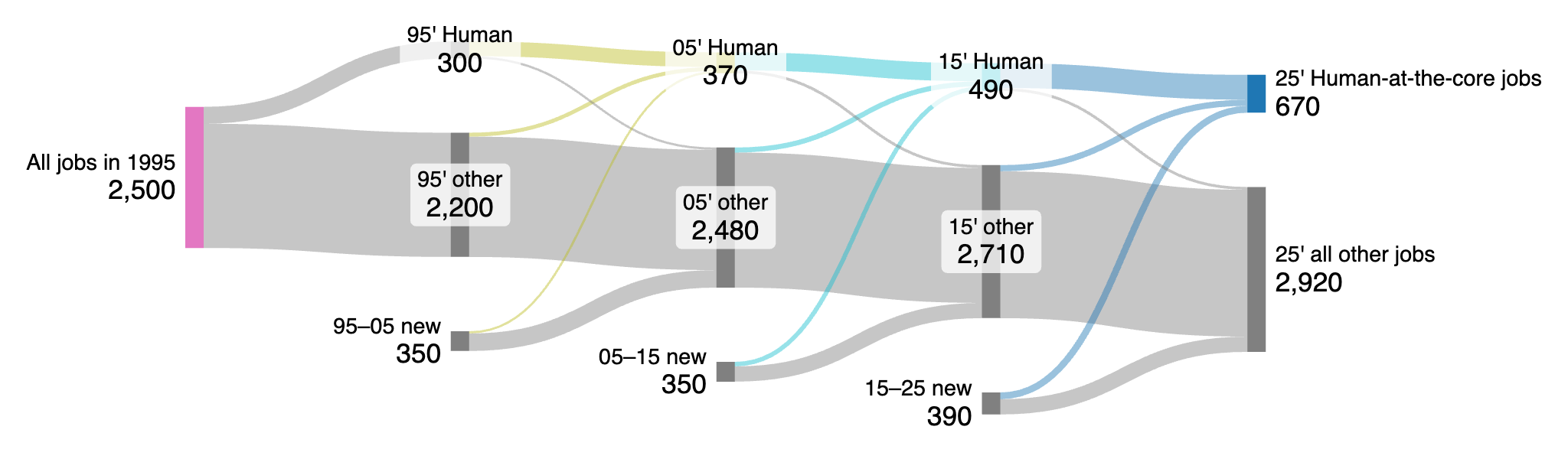
Give or take every 5th person in the world today is paid to be the human that they are: therapist, judge, shaman, sommeliers, hospice worker, comic, fitness trainer, etc. The number of people in these jobs has been growing every decade:
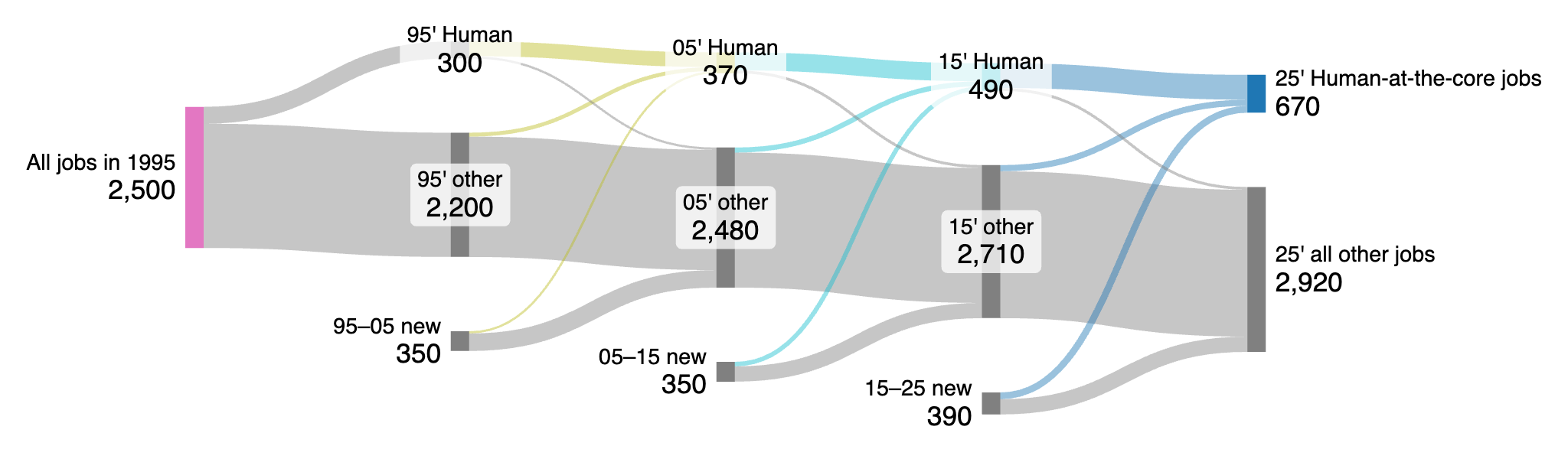
Estimates based on occupation data
Why these jobs will never be automated?
This is not controversial. Because people prefer to deal with a human and because these jobs can be very satisfying and source of meaning. See bottom of this article for the detailed enumeration.
These jobs will forever be at a $ premium
Baumol effect explains how $ spend from "other" jobs is migrating to "human@core" jobs making them at least as expensive and in most cases more expensive over time.
Automation accelerates migration to "human@core" jobs
Share of human@core jobs grows as new entrants are more likely to take these jobs and people who have other jobs gradually shed non-human aspects.
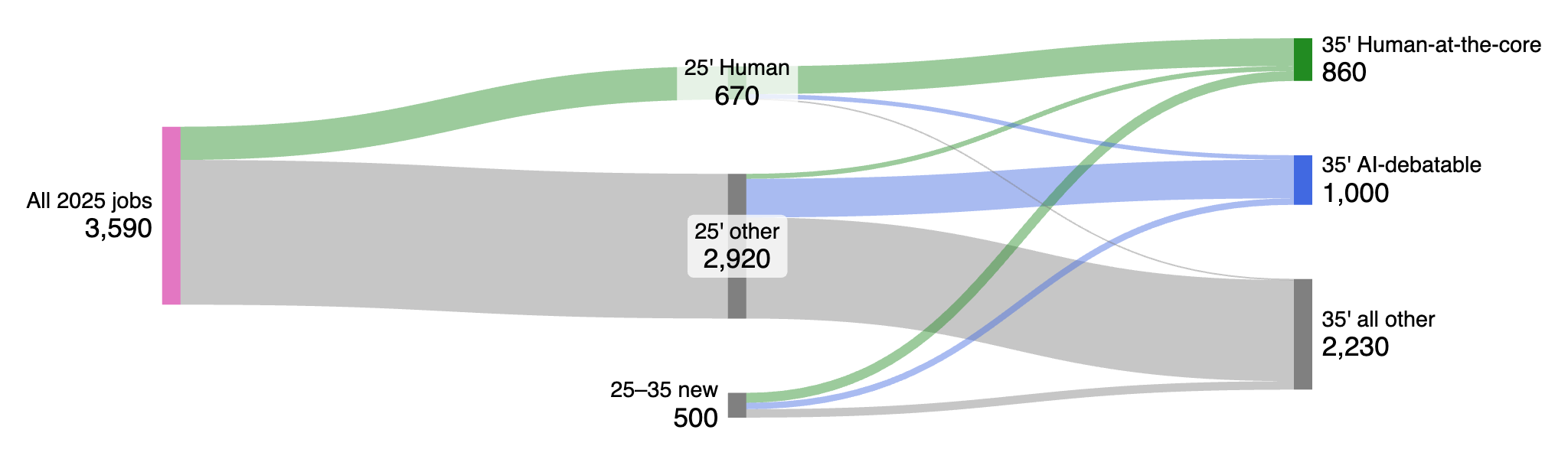
2035 estimates
1b jobs are up for "2035 AI automation debate"
Can migration to human@core jobs go faster? Yes depending on how quickly automation addresses 3 categories of work:
- "Frontier". Work where no tech exists that can complete tasks done manually today.
- "ROI nooks". Work where tech exists but cannot be deployed due to fragmentation.
- "ROI crannies". Work where tech exists but nobody would pay for it to be deployed due principal–agent problems, diffuse beneficiaries, weak enforcement, procurement politics, etc.
What are these "human@core" jobs?
1. Being with people
- Therapy / counseling / coaching
- Pastoral care, chaplaincy, grief support
- High-end hospitality, concierge, luxury retail clienteling
- Childcare, elder companionship
Why human? Being with a bot feels like a fraud.
2. Having trust, judgment, or accountability
- Judges, juries, arbitrators, parole boards
- Medical diagnosis discussions and informed consent conversations
- Executive sign-off, safety officer approvals, compliance attestations
- Crisis leadership / incident command
Why human? Even if a system is right, people want a human who can be questioned, blamed, forgiven, or relied on.
3. Sacred / ceremonial / meaning-making work
- Weddings, funerals, rites, officiants
- Diplomatic ceremonies, awards, commencements
- Community rituals, religious services
Why human? Automation undermines meaning.
4. Taste, status, and identity signaling
- Chefs, sommeliers, fashion stylists, art curators
- Celebrity endorsements, influencer content where connection matters
- Commissioned art where provenance matters
Why human? The “who” is the value.
5. Negotiation, conflict, and persuasion
- Union negotiations, labor relations
- Hostage negotiation, mediation
- Enterprise sales at high stakes (politics + coalition building)
- Internal org conflict resolution
Why human? Humans want to feel heard; outcomes depend on legitimacy and face-saving.
6. Care under vulnerability
- ICU bedside support, oncology navigation, hospice
- Social work home visits, domestic violence support
- Special education
Why human?: Automation can feel cold, disrespectful, or unemotional.
7. Live performance and presence-based entertainment
- Theater, concerts, stand-up, live sports
- DJs, live events, emcees
- Teaching where “room energy” is the value
Why human? The core value is that it happened here, now, with us.
8. Work where friction is intentionally preserved
- Certain legal procedures and hearings
- Ethics review boards, peer review panels
- “Speed bumps” in safety-critical operations
Why human? “inefficiency” is there to deter abuse or create deliberation.
9. Human effort itself
- Handmade craft, bespoke building, artisanal food
- Some fitness training (“I show up for my trainer”)
- Certain “white glove” services (home organizing, personal assistance)
Why human? Effort is a feature, not a bug.
10. Community leadership and legitimacy roles
- Elected officials (even if they use tools heavily)
- Community organizers, heads of institutions
- Brand figureheads / spokespeople
Why human? Legitimacy and mandate are human/social, not technical.
Originally published on LinkedIn.